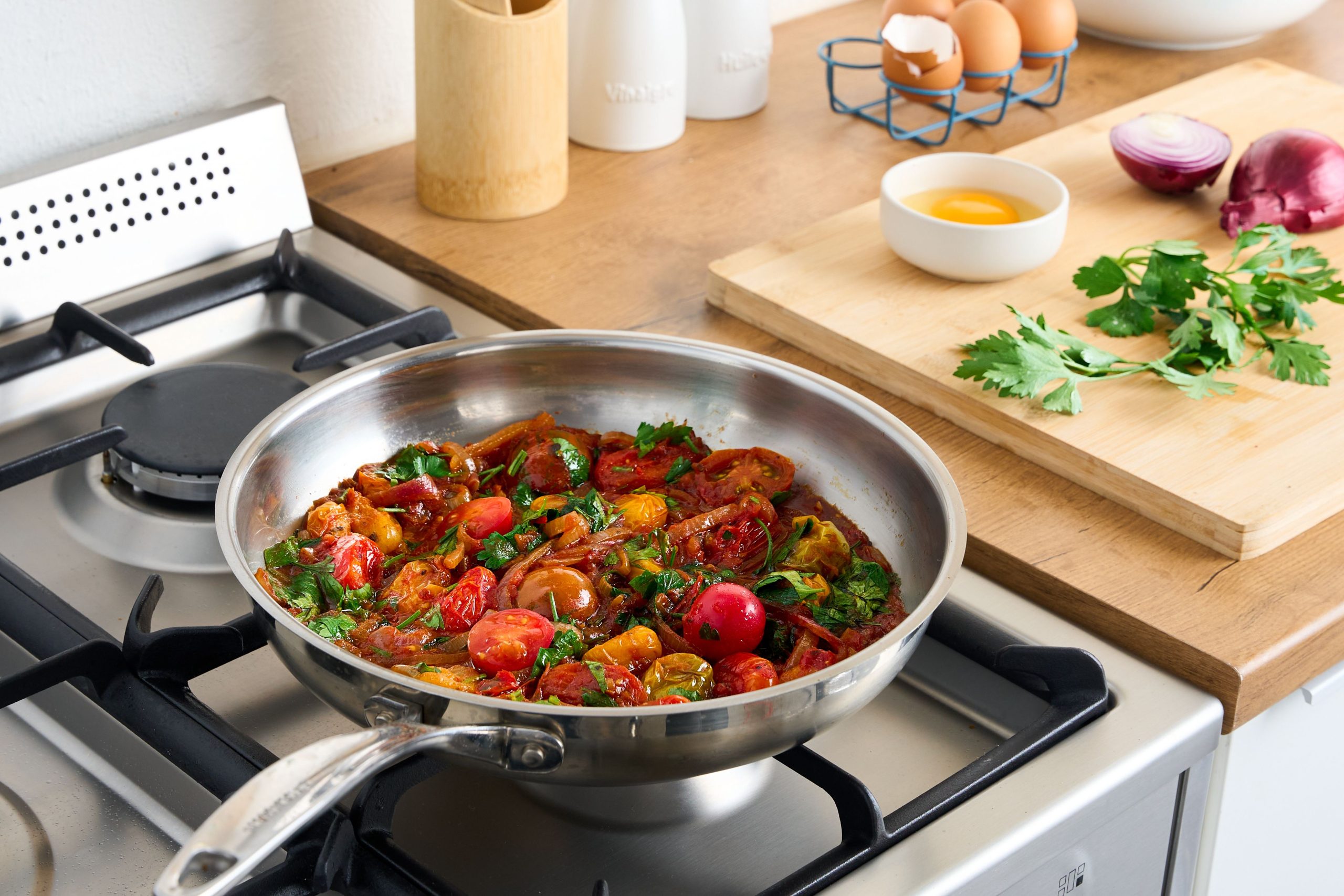
Great cooking isn’t about memorizing recipes—it’s about mastering techniques. Once you understand the core methods used in the kitchen, you can adapt to almost any dish with confidence.
Here are the essential cooking techniques that form the backbone of everyday and professional cooking.
1. Sautéing
Sautéing involves cooking food quickly in a small amount of oil over medium to high heat.
Why It Matters
- Preserves texture and color
- Enhances flavor through light browning
- Works well for vegetables, meats, and seafood
Tip: Keep ingredients moving to avoid burning.
2. Boiling
Boiling is cooking food in water or liquid at high temperature.
Common Uses
- Pasta, rice, and grains
- Vegetables
- Eggs
Best practice: Salt the water to improve flavor, especially for pasta and vegetables.
3. Simmering
Simmering is gentler than boiling and used for longer cooking.
Ideal For
- Soups and stews
- Sauces
- Slow-cooked dishes
This technique helps develop deeper flavors over time.
4. Roasting
Roasting uses dry heat in an oven to cook food evenly.
Benefits
- Creates a crispy exterior
- Enhances natural sweetness (especially in vegetables)
- Ideal for meats and root vegetables
Tip: Use high heat for better caramelization.
5. Grilling
Grilling cooks food over direct heat, often producing a smoky flavor.
Key Advantages
- Adds char and depth
- Quick cooking method
- Perfect for meats, fish, and vegetables
Preheat the grill to ensure even cooking and proper sear marks.
6. Steaming
Steaming cooks food using vapor from boiling water.
Why Use It
- Retains nutrients
- Keeps food moist
- Ideal for vegetables, dumplings, and fish
This is one of the healthiest cooking methods.
7. Frying
Frying involves cooking food in hot oil.
Types of Frying
- Shallow frying: Less oil, used for items like cutlets
- Deep frying: Fully submerged in oil for crisp texture
Important: Maintain proper oil temperature to avoid greasy food.
8. Baking
Baking uses dry heat in an enclosed space, usually an oven.
Common Applications
- Cakes, bread, and pastries
- Casseroles
- Certain meats and vegetables
Precision in temperature and timing is crucial.
9. Braising
Braising combines both dry and moist cooking methods.
How It Works
- First sear the food
- Then cook it slowly in liquid
Best For
- Tough cuts of meat
- Dishes requiring rich, deep flavor
This method transforms tougher ingredients into tender, flavorful meals.
10. Knife Skills
While not a cooking method, knife skills are essential.
Why It’s Important
- Ensures even cooking
- Improves presentation
- Speeds up preparation
Focus on consistency and safety rather than speed.
Conclusion
Mastering these essential cooking techniques gives you control in the kitchen. Instead of relying strictly on recipes, you’ll understand how to adapt, experiment, and create dishes with confidence. These skills form the foundation of cooking at any level.
FAQs
1. Which cooking technique should beginners learn first?
Sautéing and boiling are great starting points because they are simple and widely used.
2. What is the difference between roasting and baking?
Roasting typically uses higher temperatures and is often used for meats and vegetables, while baking is associated with breads and desserts.
3. How do I know when oil is ready for frying?
You can test by dropping a small piece of food into the oil—it should sizzle immediately.
4. Is steaming better than boiling?
Steaming often preserves more nutrients and texture compared to boiling.
5. Can I combine multiple cooking techniques in one dish?
Yes, many recipes use a combination, such as searing followed by simmering or baking.
6. Why is my grilled food sticking to the grill?
This can happen if the grill isn’t hot enough or properly oiled before cooking.
7. How long does it take to master these techniques?
With regular practice, you can become comfortable with most techniques within a few weeks, though mastery takes longer.